

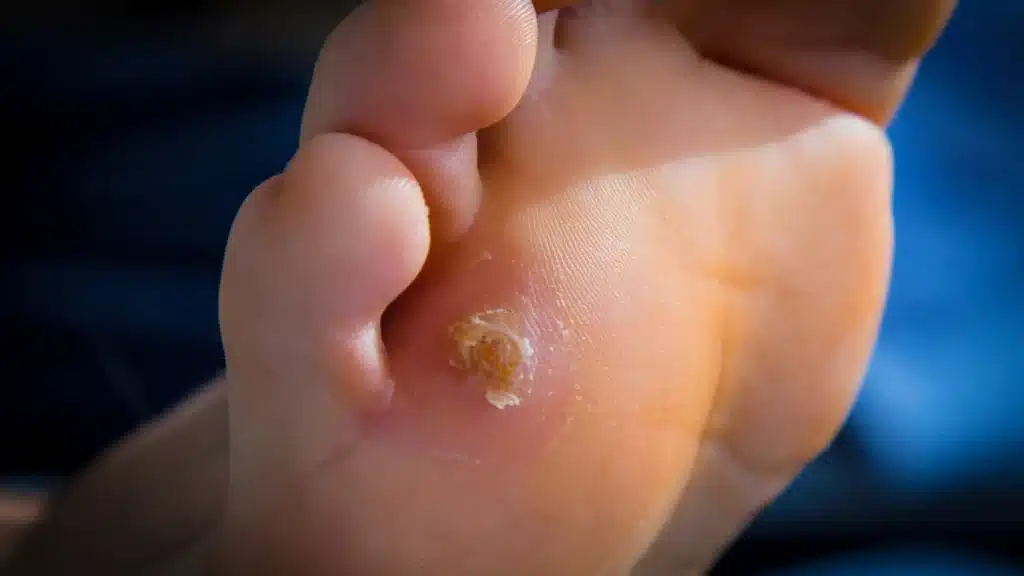
Quick Answer: Corns and calluses are thickened areas of skin that develop in response to repeated friction or pressure on your feet. Corns are small, hard bumps that typically form on toes, while calluses are larger, flatter patches that develop on weight-bearing areas like the heel or ball of the foot. Treatment from a chiropodist includes safe debridement (removal) using sterile instruments, footwear recommendations, and custom orthotics to redistribute pressure and prevent recurrence. Never attempt to cut or shave corns and calluses at home; this can lead to infection, especially for people with diabetes or poor circulation.
Corns and calluses are among the most common foot conditions, and while many people dismiss them as minor annoyances, they can become genuinely painful and, if left untreated, lead to more serious complications. Understanding what causes these areas of thickened skin, recognizing when professional treatment is necessary, and knowing how to prevent recurrence can help you maintain healthy, comfortable feet.
At LMC Footcare, our registered chiropodists treat corns and calluses daily at our 8 clinic locations across Ontario—including Toronto (Bayview/Midtown, Etobicoke, Scarborough), Vaughan, Brampton, Oakville, Barrie, and Ottawa.
Key Points About Corns and Calluses
• Corns are small, hard bumps (often with a central core) that form on toes; calluses are larger, flatter areas on the soles of feet
• Both develop from repeated friction or pressure—commonly from ill-fitting shoes or abnormal foot mechanics
• Professional removal by a chiropodist is safe and typically painless; home removal risks infection
• Custom orthotics address root causes by redistributing pressure and correcting gait abnormalities
• People with diabetes, poor circulation, or neuropathy should never treat corns or calluses at home
• Most extended health benefit plans in Ontario cover chiropody services
What Are Corns and Calluses?
Corns and calluses are both protective responses your skin makes when subjected to repeated friction or pressure. While they share this common cause, they differ in appearance, location, and how they affect your feet.
Corns: Small, Concentrated Areas of Thickened Skin
Corns are small, round areas of thickened skin that typically form on the tops, sides, or between toes. They’re characterized by a hard, dense centre (called a nucleus or core) surrounded by inflamed skin. This cone-shaped core can press into deeper tissue layers, which is why corns are often more painful than calluses, particularly when pressure is applied.
Types of corns include:
• Hard corns (heloma durum): Develop on the tops of toes, outside of the small toe, or bottom pads of feet—areas exposed to direct pressure
• Soft corns (heloma molle): Form between toes where skin stays moist from sweat; appear whitish and rubbery
• Seed corns: Tiny, discrete corns that can be very tender, often appearing in clusters on the bottom of the foot
• Vascular corns: Corns with blood vessel involvement that may bleed when trimmed—requires professional treatment
Calluses: Larger, Diffused Areas of Thick Skin
Calluses are broader, flatter patches of thickened skin without the concentrated central core that characterizes corns. They typically develop on the weight-bearing areas of your feet—the heel, ball of the foot (under the metatarsal heads), and sides of the feet. Calluses can also form on hands from repeated friction.
Unlike corns, calluses are usually not painful unless they become excessively thick or crack. In fact, some callus formation is a normal protective response—the problem arises when calluses grow too thick, begin to crack, or become painful during walking or standing.
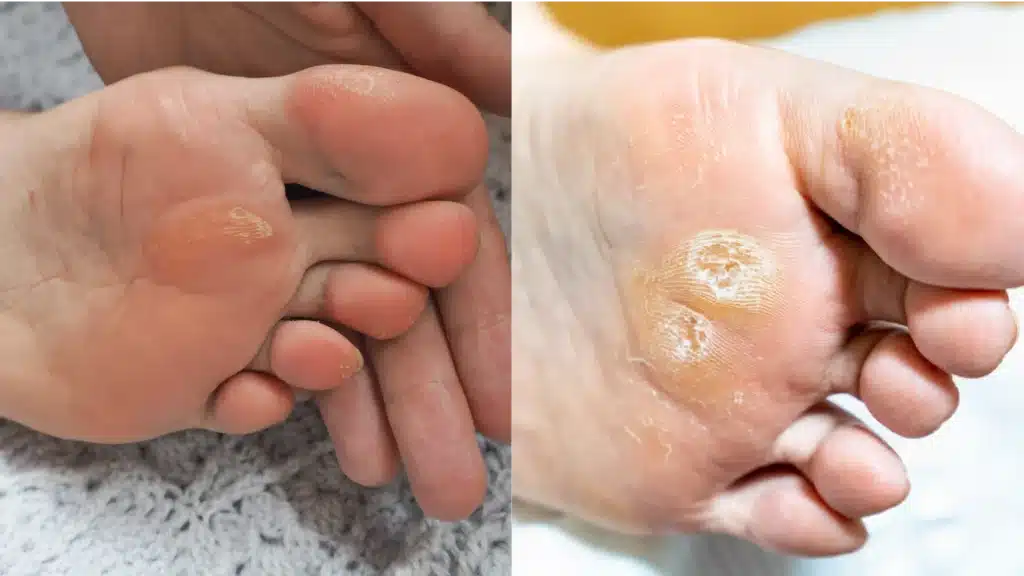
Corns vs. Calluses: Quick Comparison
| Characteristic | Corns | Calluses |
| Size | Small, round, concentrated | Larger, broader, diffused |
| Location | Tops, sides, or between toes | Heels, ball of foot, sides |
| Structure | Hard central core (nucleus) | No central core, flat |
| Pain Level | Often painful when pressed | Usually painless unless cracked |
| Appearance | Raised bump, often with redness | Yellowish, waxy, thick patches |
What Causes Corns and Calluses?
Understanding the underlying cause of your corns or calluses is essential for effective treatment and prevention. While friction and pressure are always involved, several factors can contribute to their development:
Ill-Fitting Footwear
Shoes that are too tight, too narrow, or too loose are the most common cause of corns and calluses. Tight or narrow shoes compress the toes and create friction. High heels shift weight forward onto the ball of the foot, increasing pressure in that area. Loose shoes allow the foot to slide, creating friction during walking. Shoes with inadequate cushioning fail to absorb impact during walking or standing.
Abnormal Foot Mechanics (Biomechanical Issues)
How your foot moves when you walk significantly affects pressure distribution. Conditions that alter your gait or weight distribution include overpronation (foot rolling inward excessively), supination (foot rolling outward), flat feet (pes planus), high arches (pes cavus), and uneven leg length. These biomechanical issues cause certain areas of your feet to bear more pressure than they should, leading to callus and corn formation in predictable locations.
Foot Deformities
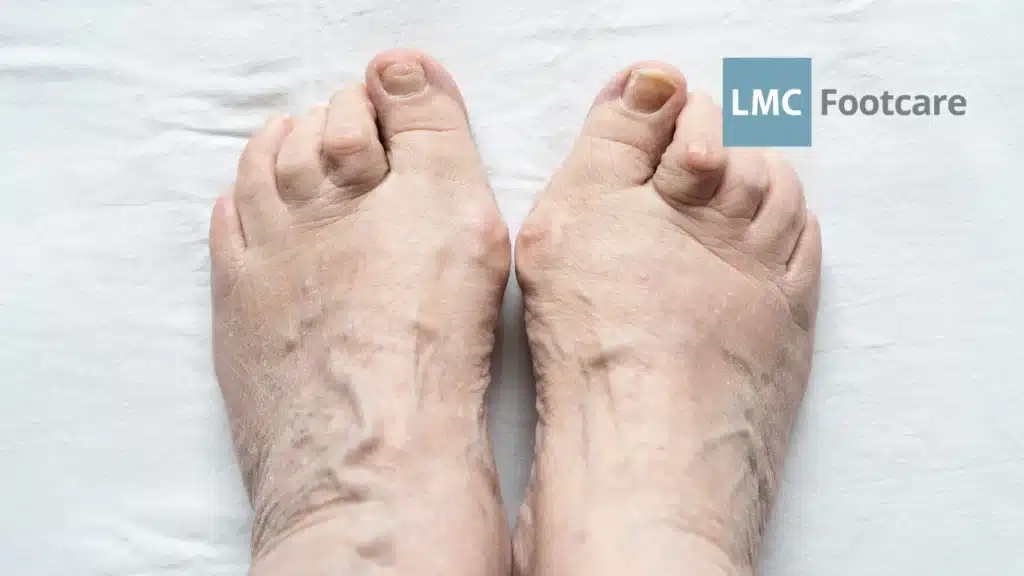
Structural abnormalities create pressure points that wouldn’t otherwise exist. Common deformities associated with corns and calluses include hammertoes (toes bent at the middle joint), bunions (bony bump at the base of big toe), tailor’s bunion (bunion on the small toe side), and claw toes or mallet toes. These deformities cause the foot to contact shoes and ground surfaces differently, concentrating pressure in specific areas.
Lifestyle and Activity Factors
Certain activities and occupations increase your risk, including standing for prolonged periods (healthcare workers, retail employees, teachers), running or walking long distances, playing sports that involve repetitive foot movements, manual labour, and walking barefoot frequently. Not wearing socks creates direct friction between your skin and shoes, accelerating corn and callus development.
Symptoms: When Should You Seek Treatment?
While minor corns and calluses may not require immediate attention, certain symptoms indicate you should see a chiropodist:
Corn Symptoms
• Painful, hard bump on top or sides of toes
• Burning or stinging sensation when pressure is applied
• Redness or inflammation surrounding the hardened area
• Pain that interferes with walking or wearing shoes
Callus Symptoms
• Thick, rough, yellowish patches on the soles of the feet
• Dry, flaky skin that may crack (especially on heels)
• Reduced sensitivity in the affected area
• Pain during prolonged standing or walking
Important for Diabetic Patients: If you have diabetes, poor circulation, or neuropathy (reduced sensation in your feet), never attempt to treat corns or calluses yourself. Even minor foot wounds can lead to serious complications, including infection and ulceration. See a chiropodist for all foot care needs.
Professional Treatment for Corns and Calluses
At LMC Footcare, our registered chiropodists provide comprehensive treatment that addresses both the immediate symptoms and underlying causes of corns and calluses. Treatment typically involves multiple approaches:
Professional Debridement (Safe Removal)
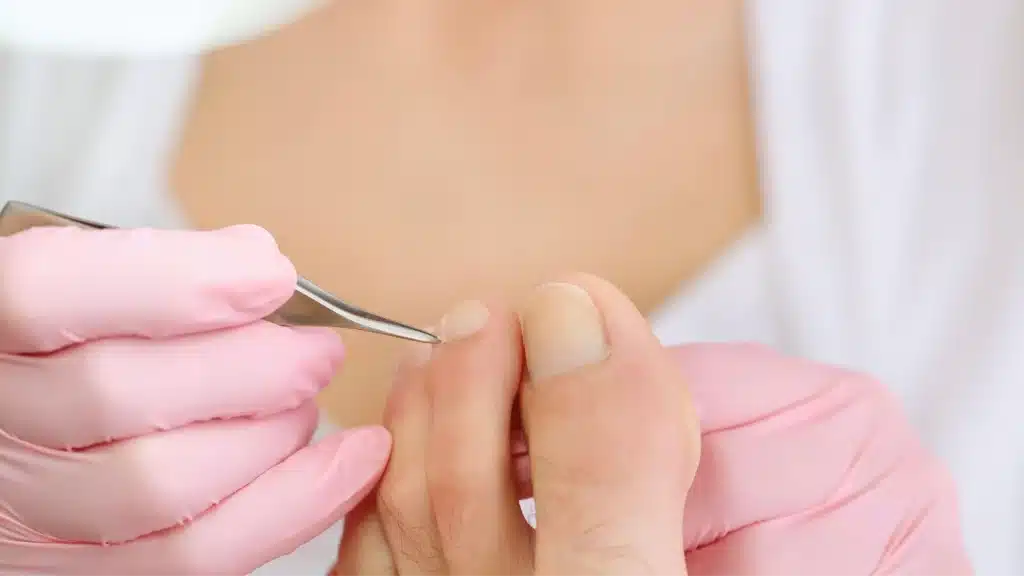
Our chiropodists use sterile scalpels and specialized instruments to carefully remove thickened skin. This procedure, called debridement, is typically painless and provides immediate relief; patients often walk out with significantly reduced or eliminated pain. Unlike home removal attempts (which risk cutting too deep, causing bleeding, or introducing infection), professional debridement is performed with precise technique and sterile equipment.
Some patients benefit from prescription topical medications between visits to help manage skin thickness or address any underlying skin conditions.
Custom Orthotics: Addressing Root Causes
Custom orthotics are one of the most effective long-term solutions for recurring corns and calluses because they address the biomechanical issues that cause them to develop in the first place.
How custom orthotics help:
Redistributing pressure: Custom orthotics spread weight more evenly across your foot, reducing the concentrated pressure that leads to callus and corn formation. For example, if you have high arches that create excess pressure under the ball of your foot, orthotics provide arch support that redistributes this pressure.
Correcting foot alignment: If your corns result from overpronation or other gait abnormalities, custom orthotics correct your foot positioning. This prevents your foot from rubbing against shoes in problematic ways and reduces the friction that causes corns.
Providing targeted cushioning: Orthotics can include extra padding in specific areas prone to calluses—such as under the heel, ball of the foot, or metatarsal heads—absorbing shock and reducing friction.
Preventing recurrence: By maintaining proper foot mechanics, custom orthotics help prevent new corns and calluses from developing. This is particularly valuable for people with structural foot issues like flat feet, high arches, or bunions.
At LMC Footcare, our chiropodists assess each patient’s foot structure and gait to create custom orthotics specifically tailored to their needs. Because chiropodists in Ontario can prescribe orthotics directly, you don’t need a separate referral; it’s included in your assessment.
Footwear Guidance
Proper footwear is essential for both treatment and prevention. Our chiropodists provide specific recommendations, including:
• Shoes with adequate toe room (you should be able to wiggle your toes)
• Secure fit that prevents sliding
• Appropriate heel height for your activities
• Adequate cushioning, especially for those on their feet frequently
• Bringing orthotics when purchasing new shoes to ensure proper fit
Home Care Between Chiropodist Visits
While professional treatment addresses the root cause, proper home care supports healing and prevents recurrence:
• Moisturize daily: Apply a thick foot cream after bathing (but not between toes, where moisture can cause soft corns)
• Soak feet regularly: Warm water softens thickened skin; gently use a pumice stone after soaking
• Wear socks: Always wear socks with shoes to reduce friction
• Use orthotics consistently: Wear them as often as possible, including in house slippers
Why Choose LMC Footcare for Corn and Callus Treatment
LMC Footcare is part of LMC Healthcare, one of Canada’s largest teams of medical specialists. Our chiropodists treat the most complex foot conditions daily, which means common conditions like corns and calluses are handled with clinical precision.
Approved Provider Network: LMC Healthcare is a member of the Approved Provider Network (APN), recognized for quality and ethical business practices. This allows us to serve as exclusive providers for various hospitals and insurance companies in Ontario.
Collaborative Approach: While no referral is needed to see our chiropodists, we keep your family physician informed with assessment and treatment summaries, ensuring coordinated care.
Convenient Locations: With 8 clinics across Ontario—Barrie, Bayview/Midtown Toronto, Brampton, Etobicoke, Oakville, Ottawa, Scarborough, and Vaughan—expert foot care is never far away. We don’t take walk-ins, but appointments are readily available.
Book Your Foot Care Appointment
If corns or calluses are causing you discomfort, or if you want to prevent them from developing by using custom orthotics, our registered chiropodists can help. Your initial consultation includes a full foot examination, treatment for your condition, and a follow-up management plan with education on prevention.
Contact LMC Footcare at 1-844-562-3668 or book your appointment by visiting https://lmcfootcare.ca/appointment-booking/
Insurance Note: OHIP does not currently cover chiropody services, but most extended health benefit plans cover chiropody under paramedical services. We provide all necessary receipts for insurance submission.
Frequently Asked Questions About Corns, Calluses, and Orthotics
What is the difference between a corn and a callus?
Corns are small, round areas of thickened skin with a hard central core that typically form on toes. They’re often painful when pressed. Calluses are larger, flatter areas of thick skin without a central core, usually found on the bottom of the foot (heel, ball of foot). Calluses are generally less painful than corns unless they crack or grow excessively thick.
Can I remove corns and calluses at home?
While gentle filing with a pumice stone after soaking can help manage calluses, you should never attempt to cut, shave, or use medicated corn removal pads at home. These methods risk cutting too deeply, causing infection, or chemically burning surrounding healthy skin. Professional removal by an LMC chiropodist is safe, typically painless, and provides better results. People with diabetes, poor circulation, or neuropathy should always seek professional treatment for any foot condition.
How can custom orthotics help with corns and calluses?
Custom orthotics address the root causes of corns and calluses by redistributing pressure across your foot, correcting gait abnormalities like overpronation, and providing cushioning in high-pressure areas. By improving your foot mechanics, orthotics prevent the repeated friction and pressure that cause corns and calluses to develop in the first place—reducing recurrence significantly compared to treating symptoms alone. LMC Footcare offers custom orthotics tailored to your needs.
Will corns and calluses come back after treatment?
If the underlying cause (such as ill-fitting footwear or abnormal foot mechanics) isn’t addressed, corns and calluses often return. That’s why LMC Footcare chiropodists focus on both immediate treatment and prevention—recommending appropriate footwear, prescribing custom orthotics when needed, and providing education on home care. With proper prevention strategies, many patients significantly reduce or eliminate recurrence.
Are corns and calluses dangerous for people with diabetes?
Yes, corns and calluses can be serious for people with diabetes. Diabetes often causes neuropathy (reduced sensation) and poor circulation, which means you may not feel pain from a corn or callus, and any wounds heal slowly. What starts as a simple corn can break down into an ulcer or become infected. Diabetic patients should have regular foot examinations from a chiropodist and should never attempt home treatment for any foot condition.
Does OHIP cover corn and callus treatment in Ontario?
OHIP does not currently cover chiropody services. However, most extended health benefit plans cover chiropody services and orthopedic devices (like custom orthotics) under paramedical services. LMC Footcare provides all necessary receipts for you to submit claims to your insurance provider. We do not direct bill insurance companies.
Do I need a referral to see a chiropodist at LMC Footcare?
No referral is required for an initial assessment or treatment at LMC Footcare. We accept all patients. If you plan to use extended health benefits, check with your insurance provider about your plan’s specific requirements. Chiropodists in Ontario can also prescribe custom orthotics directly—you don’t need a separate prescription.
Where are LMC Footcare clinics located?
LMC Footcare has 8 clinic locations across Ontario: Barrie, Bayview/Midtown Toronto, Brampton, Etobicoke, Oakville, Ottawa, Scarborough, and Vaughan. Visit lmcfootcare.ca/locations for addresses and directions to the clinic nearest you.
Disclaimer: This article is for informational purposes only and should not replace professional medical advice. Always consult with a healthcare provider before starting any new treatment, especially if you have existing health conditions.