

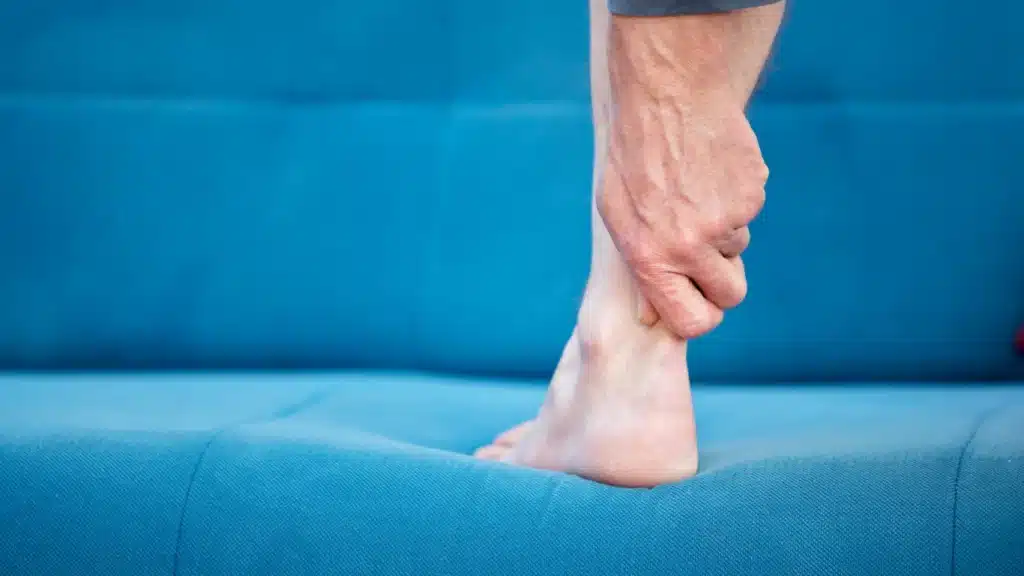
Compression socks can help with Achilles tendonitis by reducing swelling around the tendon, improving circulation to the injured area, and providing light structural support to the lower leg during activity and recovery. While they are not a standalone treatment, they are a practical and low-risk addition to a broader Achilles tendonitis management plan recommended by a foot care professional. At LMC Footcare, our registered chiropodists regularly incorporate compression therapy as part of personalized treatment plans for patients managing Achilles tendonitis across our Ontario clinics.
What Is Achilles Tendonitis and What Causes It?
Achilles tendonitis is inflammation of the Achilles tendon, the thick band of tissue connecting the calf muscles to the heel bone. It typically develops from repetitive strain, overuse, sudden increases in activity, or wearing unsupportive footwear. It causes pain, stiffness, and swelling along the back of the heel and lower leg, particularly in the morning or after exercise.
How Can Compression Socks Help With Achilles Tendonitis?
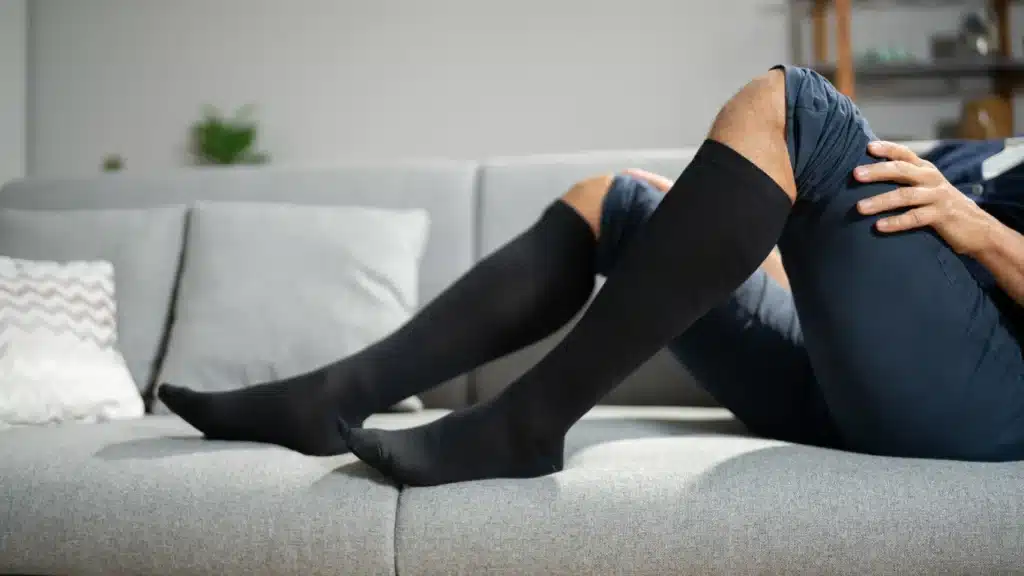
Compression socks help by applying graduated pressure to the lower leg, which reduces fluid buildup around the inflamed tendon and supports healthy circulation to the area. Better blood flow delivers oxygen and nutrients that the tendon needs to repair itself. Many people find that wearing compression socks during the day reduces the aching and tightness associated with Achilles tendonitis.
Do Compression Socks Reduce Swelling From Achilles Tendonitis?
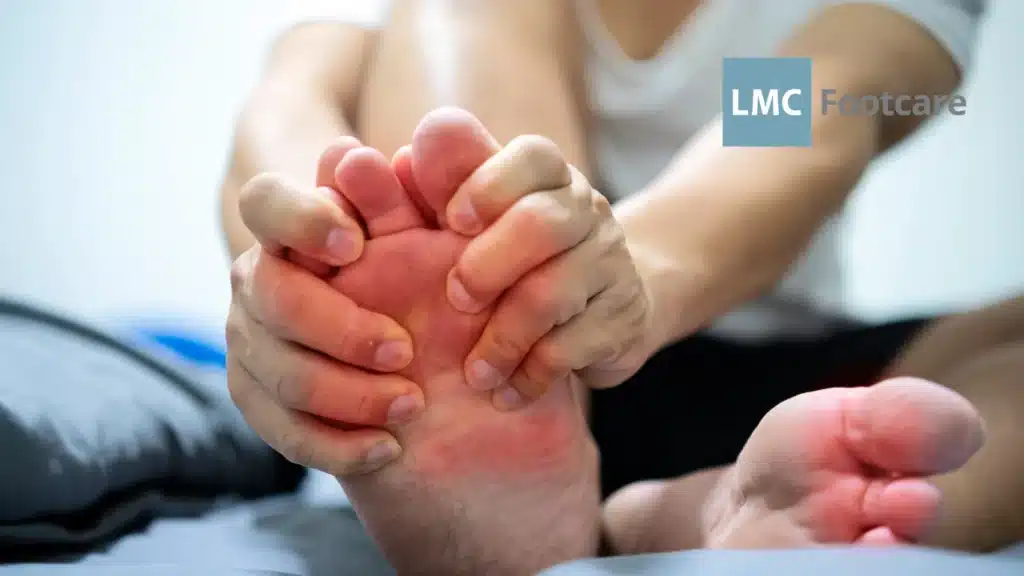
Yes. Swelling is a hallmark symptom of Achilles tendonitis, and compression socks are effective at minimizing fluid accumulation around the tendon and ankle. By applying consistent pressure from the foot upward, they discourage excess fluid from settling in the tissue. This can make the tendon area feel less tight and more comfortable throughout the day, particularly during prolonged standing or walking.
Can You Wear Compression Socks While Exercising With Achilles Tendonitis?
Compression socks can be worn during low-to-moderate activity when managing Achilles tendonitis, as they provide support and help control swelling during movement. However, they are not a substitute for proper rehabilitation or activity modification. If exercise is aggravating the tendon, reducing intensity and consulting a chiropodist or physiotherapist is essential before continuing training with or without compression. The team at LMC Footcare can help determine what level of activity is appropriate during your recovery.
Are Compression Socks Enough to Treat Achilles Tendonitis on Their Own?
No. Compression socks are a supportive tool, not a primary treatment for Achilles tendonitis. Effective management typically requires a combination of rest, targeted stretching and strengthening exercises, footwear changes, and, in many cases, custom orthotics to correct biomechanical issues contributing to the condition. An LMC Footcare chiropodist and Canadian Certified Pedorthist can assess the root cause and build a comprehensive treatment plan tailored to your situation.
Alongside compression socks, Achilles tendonitis is commonly treated with calf and tendon stretching protocols, eccentric strengthening exercises, custom orthotics to reduce strain on the tendon, footwear modifications, shockwave therapy for chronic cases, and laser therapy to promote tissue healing and reduce inflammation. The right combination depends on the severity of the condition and how long it has been present.
What Other Treatments Are Used Alongside Compression Socks for Achilles Tendonitis?
What Compression Level Is Best for Achilles Tendonitis?
For Achilles tendonitis, a moderate compression level in the range of 15–20 mmHg is generally appropriate for managing swelling and supporting circulation during daily activity and light exercise. Higher compression levels are typically reserved for vascular conditions and should only be used under professional guidance. The chiropodists and Canadian Certified Pedorthist at LMC Footcare can assess your specific presentation and recommend the most suitable compression level for your needs.
How Long Should You Wear Compression Socks When Recovering From Achilles Tendonitis?
Most people benefit from wearing compression socks throughout the day during the active recovery phase — from the morning until bedtime. Putting them on before getting up helps manage swelling before it develops. As the tendon heals and symptoms reduce, the frequency of use can be gradually reduced. A foot care professional (our chiropodist and Canadian Certified Pedorthists) at LMC Footcare can advise on when it is appropriate to taper off.
Related Conditions We Treat
Achilles tendonitis often occurs alongside other lower limb conditions that benefit from professional foot care. At LMC Footcare, our chiropodists and Canadian Certified Pedorthists assess and treat a range of related concerns, including plantar fasciitis and heel pain, flat feet and overpronation contributing to tendon strain, general foot and ankle swelling, post-surgical lower leg recovery, and lower limb circulatory concerns where compression therapy is recommended. Addressing these conditions together leads to more complete and lasting recovery.
Who Treats Achilles Tendonitis at LMC Footcare?
At LMC Footcare, registered chiropodists and Canadian Certified Pedorthists assess the biomechanical and structural factors contributing to Achilles tendonitis and develop individualized treatment plans. With clinic locations across Ontario, including Toronto and Vaughan, LMC Footcare makes it easy to access professional foot care close to home. Chiropodists are regulated foot care professionals with specialized training in tendon conditions, gait analysis, orthotic therapy, and compression garment fitting — providing evidence-informed care that goes beyond symptom management to address the underlying cause of your condition. Should you already have a prescription for compression stockings from your family doctor, and simply need compression products to be provided and measured for, our Canadian Certified Pedorthists can be of assistance.
Frequently Asked Questions
Q: Can compression socks make Achilles tendonitis worse?
When properly fitted and worn at an appropriate compression level, compression socks should not worsen Achilles tendonitis. However, socks that are too tight, incorrectly sized, or worn at too high a compression level without professional guidance can restrict circulation or place additional pressure on an already irritated tendon. Always have compression socks properly assessed and fitted by a healthcare provider.
Q: Should I wear compression socks to bed with Achilles tendonitis?
Wearing compression socks overnight is not generally recommended unless specifically directed by a healthcare provider. During sleep, the legs are horizontal, and circulation is naturally supported without the need for compression. Some people with Achilles tendonitis use a night splint to keep the foot in a slightly dorsiflexed position overnight, which helps reduce morning stiffness — your chiropodist and Canadian Certified Pedorthist can advise on the best approach.
Q: Can I still walk or exercise with Achilles tendonitis?
Light walking is generally acceptable with Achilles tendonitis, but high-impact activity like running or jumping should be avoided during the acute phase. A graduated return to activity, guided by a chiropodist or physiotherapist, helps rebuild tendon strength without re-aggravating the injury. Wearing supportive footwear and compression socks during this phase can help manage symptoms as activity levels increase.
Q: Where can I get compression socks and an Achilles tendonitis assessment in Ontario?
LMC Footcare clinics across Ontario offer comprehensive assessments for Achilles tendonitis and professional compression sock fittings. Our registered chiropodists and Canadian Certified Pedorthists can identify the contributing factors to your condition and recommend the right combination of compression, orthotics, and treatment to support your recovery. Book an appointment at your nearest LMC Footcare location today.