

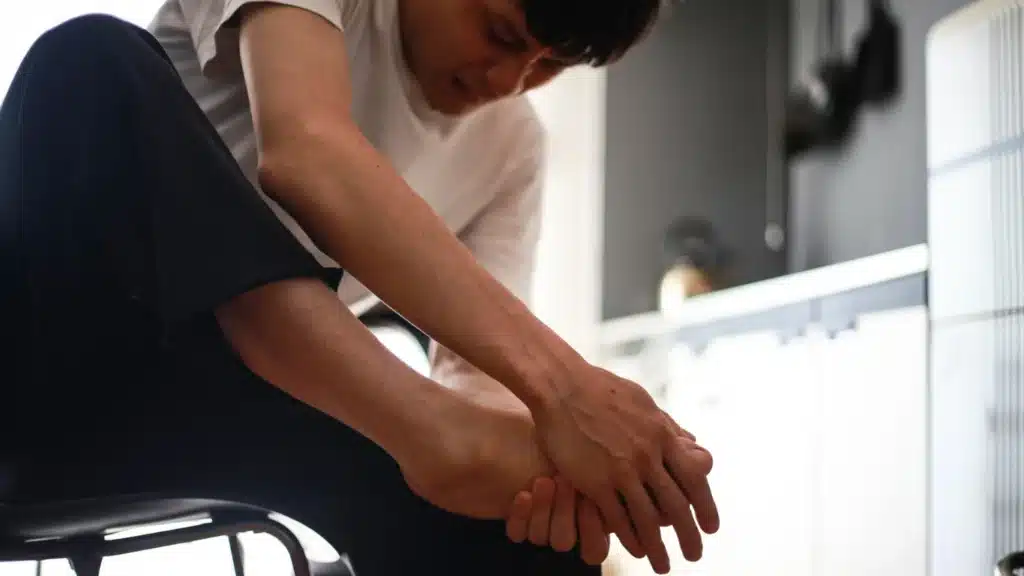
If you’ve been noticing discomfort under the front part of your foot, right behind your toes, you may be dealing with a condition called metatarsalgia.
At LMC Footcare, we see patients with this type of forefoot pain regularly. It affects people from all walks of life, runners and retail workers, teachers and retirees. However, once you understand what’s causing it, there are very effective ways to manage it and get back to moving comfortably.
Book a foot assessment at LMC Footcare and find out exactly what’s driving your forefoot pain.
What Is Metatarsalgia?
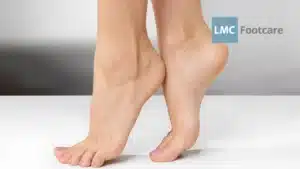
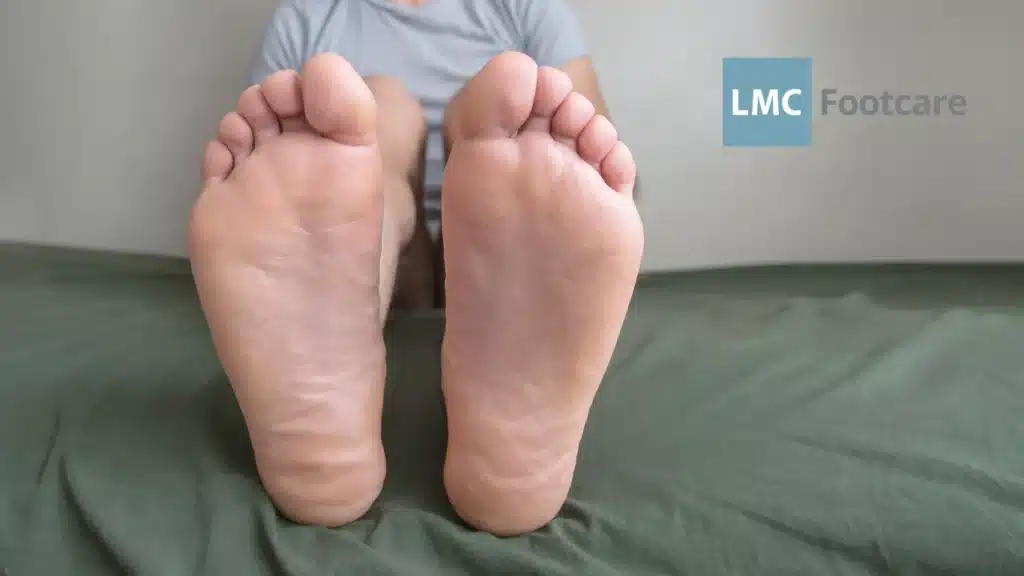
Metatarsalgia (pronounced met-uh-tahr-SAL-jee-uh) is a general term for pain and inflammation in the ball of the foot, specifically around the metatarsal heads, which are the rounded ends of the five long bones that connect your ankle to your toes.
When you walk, run, or even stand, these bones bear a significant portion of your body weight. Under normal circumstances, that load is distributed fairly evenly. But when something disrupts that balance, whether it’s your foot structure, your footwear, or how much time you spend on your feet, too much pressure concentrates on those metatarsal heads. That’s when the pain starts.
What Does Metatarsalgia Feel Like?
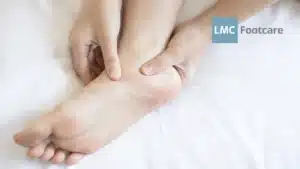
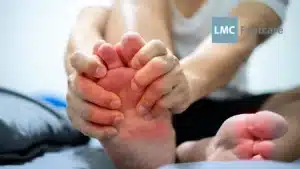
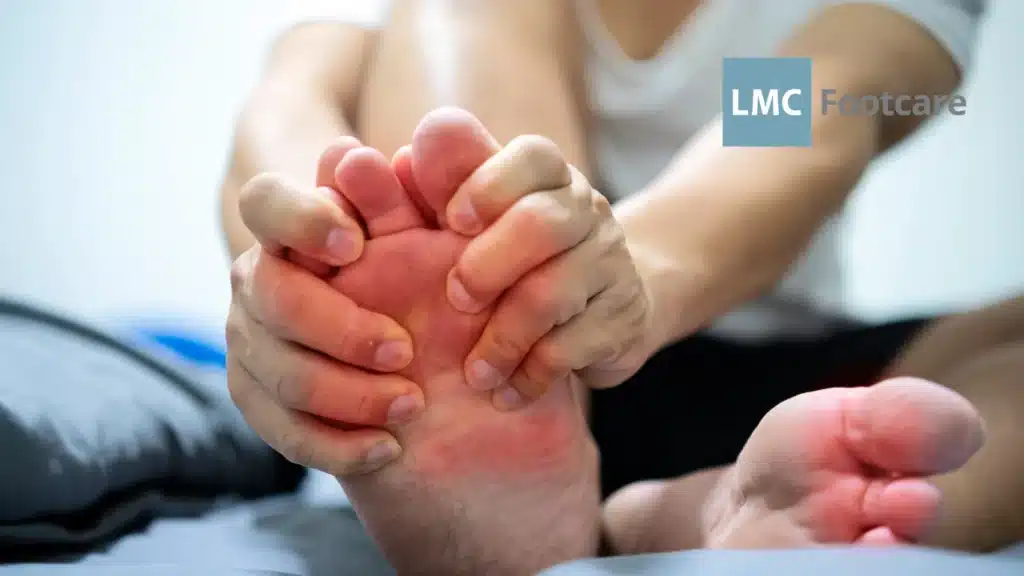
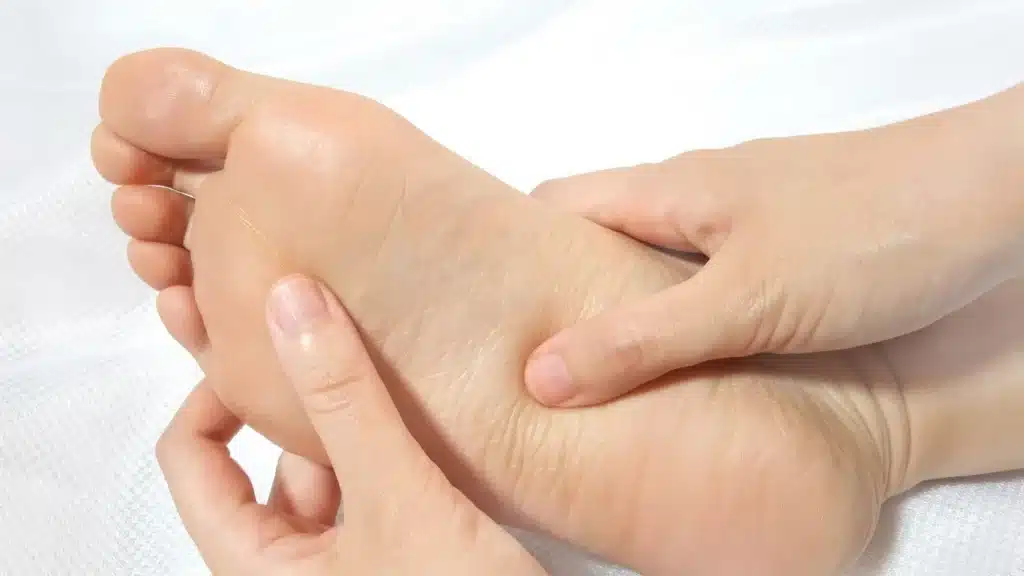
People describe the sensation differently. Some say it feels like walking on pebbles or marbles. Others notice sharp, aching, or burning pain in the ball of the foot that worsens after standing or walking for extended periods. The discomfort typically eases with rest and gets worse when you’re active again.
Common symptoms include:
- Pain in the ball of the foot that worsens with activity, especially walking or running
- A burning or tingling sensation in the toes
- Discomfort that improves when you take weight off the foot
- Numbness or a feeling of fullness in the forefoot area
- Pain that flares up when going barefoot on hard floors
If any of these sound familiar, it’s worth getting your feet properly assessed by LMC Footcare chiropodists and Canadian Certified Pedorthists. What feels like general forefoot aching could have a very specific cause — and identifying that cause is what leads to real, lasting relief.
What Causes Ball-of-Foot Pain After Walking?
There’s rarely just one reason why metatarsalgia develops. More often, it’s a combination of factors that put ongoing stress on the front of the foot.
Foot structure High arches place more pressure on the metatarsal heads because the arch doesn’t absorb impact the way it should. Flat feet, on the other hand, cause an inappropriate distribution of pressures as you compensate how you walk. Both arch types can contribute to metatarsalgia, just in different ways.
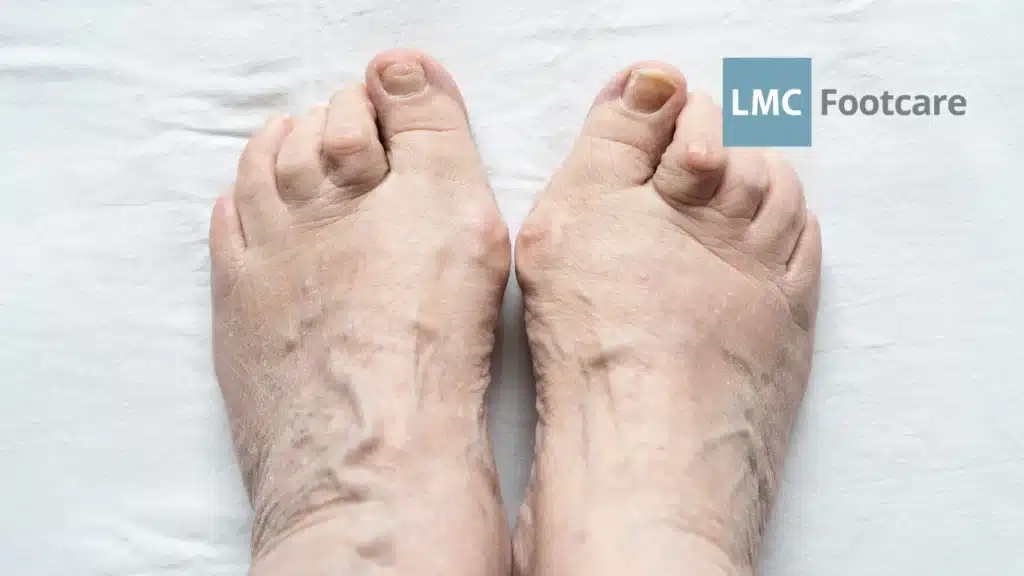
Toe deformities Conditions like hammer toes or bunions alter how your foot distributes weight when you walk. When the toes can’t function properly, the metatarsal heads compensate by bearing more of the load.
Footwear choices High heels are a common culprit. They shift your body weight forward onto the ball of the foot, increasing forefoot pressure with every step. Shoes that are too narrow, too flat, or lack adequate cushioning and support can also contribute over time.
High-impact activity Running, jumping, and sports that involve repetitive forefoot loading, like tennis, basketball, or hiking, increase the cumulative stress on the metatarsal area. Increasing your activity level too quickly without the right footwear or support is a common trigger.
Age-related changes The fat pad that cushions the ball of your foot naturally thins as you age, reducing the natural shock absorption your foot once had. This leaves the metatarsal heads more vulnerable to pressure and pain.
Body weight Carrying extra weight increases the load through every part of your foot, including the forefoot. This doesn’t mean weight loss is the only solution, but it is a factor that a foot care professional will consider when assessing your overall foot mechanics.
Why Does the Pain Get Worse After Walking Specifically?
This is one of the most common questions we hear. The reason the pain tends to build or intensify after a walk — rather than during it — comes down to cumulative loading.
Each step you take places repeated pressure on those metatarsal heads. Over the course of a walk, that stress accumulates in the soft tissue and bone around the forefoot. By the time you sit down or come to rest, inflammation has already set in. You might feel relatively fine while moving, but once you stop, the aching, burning, or throbbing sensation becomes much harder to ignore.
This pattern is actually very helpful for a foot care specialist diagnosing you. It points toward a mechanical load issue rather than something like an acute injury — and mechanical load issues respond very well to the right support and treatment.
If you’re also experiencing heel pain or arch discomfort alongside forefoot pain, these conditions are often connected through the same underlying biomechanical issues — another reason why a full foot assessment at LMC Footcare gives you a much clearer picture than treating each symptom in isolation.
When Should You See a Chiropodist or Canadian Certified Pedorthist?
Not all forefoot pain is metatarsalgia. Similar symptoms can be caused by Morton’s neuroma (nerve irritation between the toes), stress fractures, sesamoiditis, or even referred pain from the ankle or knee. That’s why a proper assessment matters.
You should book an appointment with a chiropodist if:
- The pain has lasted more than two weeks
- It’s interfering with your daily activities or exercise routine
- You’ve tried changing shoes, and the pain hasn’t improved
- The discomfort is getting progressively worse
- You notice any swelling, bruising, or visible changes in the shape of your foot
At LMC Footcare, our chiropodists and Canadian Certified Pedorthists are trained to identify the exact source and pattern of your foot pain. We assess your foot structure, gait mechanics, and footwear to build a picture of what’s actually going on, and give you a clear plan to address it.
How Is Metatarsalgia Treated?
Treatment depends on the underlying cause, but there are several approaches that consistently produce good results for people dealing with ball-of-foot pain.
Footwear adjustments Switching to shoes with a wider toe box, a rocker sole, or better midfoot structure can make an immediate difference. Your footwear should be appropriate for the activities you’re doing — a flat casual shoe and a running shoe serve very different biomechanical purposes.
Activity modification Temporarily reducing high-impact activities while the inflammation settles is often part of the early management plan. This doesn’t mean stopping movement entirely — low-impact alternatives like swimming or cycling keep you active without loading the forefoot.
Stretching and strengthening Tight calves and a stiff Achilles tendon can increase forefoot loading by restricting how your foot moves through its natural range during walking. Targeted stretching exercises help restore flexibility and reduce the mechanical stress that contributes to metatarsalgia.
Custom foot support For many people, this is where the most meaningful and lasting improvement comes from. Custom-made foot supports, designed specifically around your foot shape and gait, redistribute pressure away from the irritated metatarsal heads and correct the underlying imbalances driving the problem. Unlike generic insoles picked up at a pharmacy, these are prescribed and fitted by a professional after a thorough biomechanical assessment.
At LMC Footcare, our chiropodists and Canadian Certified Pedorthists use this approach regularly for metatarsalgia patients. To learn more about how this works and what to expect, read our post on How Custom Orthotics Alleviate Pain from Standing or Walking All Day.
What to Expect at LMC Footcare
We keep things straightforward. When you come in for an assessment, your Chiropodist or Canadian Certified Pedorthist will take the time to understand your symptoms, look at your foot structure, and watch how you walk. You won’t be rushed through. We want to make sure you leave with a clear picture of what’s going on and what your options are.
Our clinics are located in Ontario, including Vaughan and Bayview/Midtown Toronto, making us accessible to patients across the Greater Toronto Area. Whether you’re dealing with a recent onset of forefoot pain or something that’s been building for months, we’re here to help you get back to walking without discomfort.
Frequently Asked Questions
1. Is metatarsalgia the same as a stress fracture?
No. Metatarsalgia is a soft tissue and mechanical pressure issue, while a stress fracture is a small crack in the bone itself. Both can cause forefoot pain, which is why getting a proper diagnosis is important. A footcare specialist can help determine which one you’re dealing with.
2. Can I keep walking if I have metatarsalgia?
In many cases, yes — especially on level ground with appropriate footwear. However, high-impact activity or walking on hard surfaces for extended periods may worsen the inflammation in the short term. Your specialist will advise you on what’s appropriate for your specific situation.
3. Will over-the-counter insoles help?
They may provide some temporary cushioning, but they’re unlikely to correct the underlying biomechanical factors causing your forefoot pain. Generic insoles are not shaped to your foot and don’t address your specific gait pattern. Custom-fitted foot supports are typically far more effective for ongoing metatarsalgia. See how custom orthotics differ from store-bought insoles.
4. How long does it take to recover from metatarsalgia?
With the right intervention, many patients notice significant improvement within a few weeks. Recovery time depends on how long the condition has been present, the underlying cause, and how consistently the recommended treatment is followed. Addressing it early almost always leads to faster results.
5. Can metatarsalgia come back after treatment?
It can, particularly if the underlying cause — such as foot structure, footwear habits, or activity level — isn’t addressed. That’s why a comprehensive approach that goes beyond just managing symptoms is important for long-term relief.
Don’t Let Forefoot Pain Hold You Back
Ball-of-foot pain after walking is common, but it’s not something you just have to live with. Metatarsalgia has clear causes, and those causes respond well to the right combination of footwear guidance, movement adjustments, and properly fitted foot support.
If the ball of your foot has been hurting after walks, the best thing you can do is get it properly assessed. Our Chiropodists and Canadian Certified Pedorthists at LMC Footcare are ready to help you understand what’s driving the pain and put a plan in place that actually works.
Book your foot assessment at LMC Footcare → Or call us at 1-844-562-3668 | Email: footcare@lmc.ca