

Custom orthotics can help manage hammer toes by correcting the underlying foot mechanics that contribute to the deformity, redistributing pressure away from the affected toes, and slowing progression in early, flexible cases. They are most effective when the hammer toe is still flexible and the underlying cause, such as flat feet or muscle imbalance, can still be influenced. In more rigid or advanced cases, orthotics help manage symptoms and may be combined with other treatments. At LMC Footcare, our registered chiropodists across Ontario, including Toronto and Vaughan, assess hammer toes to determine the most appropriate treatment path.
What Is a Hammer Toe and What Causes It?
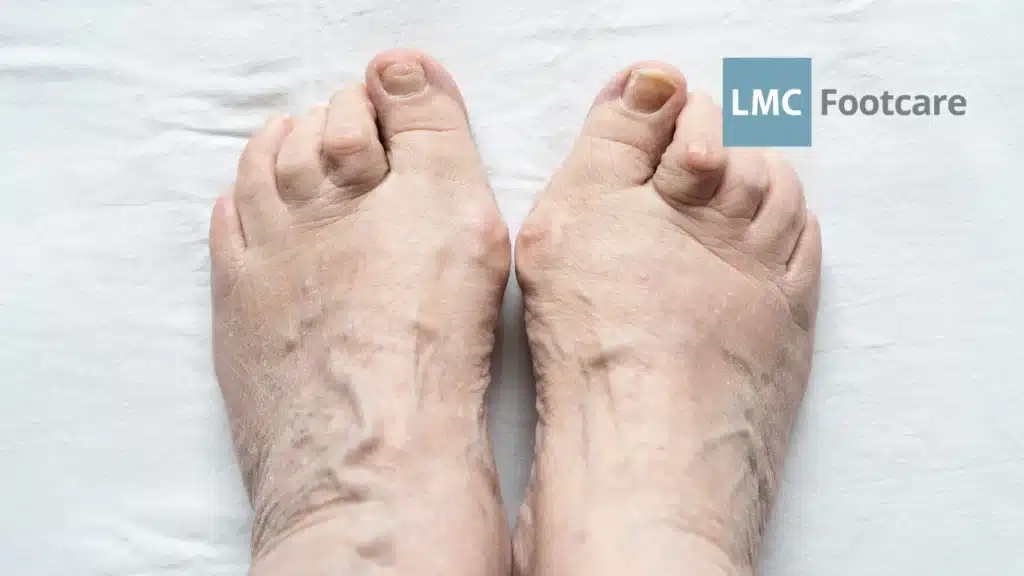
A hammer toe is a deformity in which one of the smaller toes (most often the second toe) bends abnormally at the middle joint, creating a claw-like appearance. It develops from a muscle and tendon imbalance that pulls the toe out of its normal alignment over time. Common contributing factors include flat feet, tight or unsupportive footwear, bunions, high arches, and certain neurological or muscular conditions that affect toe positioning.
Are Hammer Toes Flexible or Rigid?
Hammer toes exist on a spectrum from flexible to rigid. In the early stages, a flexible hammer toe can still be manually straightened and the joint moves freely, which means conservative treatments like orthotics have the greatest opportunity to influence the deformity. As the condition progresses, the toe can become rigid, meaning the joint stiffens into the bent position and can no longer be manually straightened. This distinction is critical, as it significantly affects which treatments will be effective.
Can Orthotics Help With Flexible Hammer Toes?
Yes. For flexible hammer toes, custom orthotics can be highly effective. By correcting underlying biomechanical issues, such as overpronation or an unstable arch, that contribute to the muscle imbalance pulling the toe out of alignment, orthotics can help slow or halt progression of the deformity. They also redistribute pressure across the foot, relieving the toe and forefoot from focal stress, and may incorporate features specifically designed to support proper toe alignment during walking.
What Type of Orthotic Works Best for Hammer Toes?
The most effective orthotic for hammer toes typically combines arch support to correct the underlying biomechanical cause with a metatarsal pad to redistribute pressure away from the ball of the foot and affected toes. In some cases, a toe crest or toe separator component is incorporated into the device to provide gentle support and reduce the bending forces acting on the toe. The exact design depends on the severity of the deformity, foot structure, and findings from a biomechanical assessment.
Can Orthotics Help With Rigid Hammer Toes?
Orthotics are less able to influence the alignment of a rigid hammer toe, since the joint can no longer be repositioned through external support. However, they remain valuable for managing symptoms by redistributing pressure away from the prominent joint and ball of the foot, which often becomes painful from rubbing against footwear or bearing excess load. In rigid cases, orthotics are typically used alongside other interventions rather than as a tool to reverse the deformity itself.
What Footwear Helps With Hammer Toes?
Footwear with a wide, deep toe box is essential for managing hammer toes, as it reduces pressure and friction on the bent joint. Shoes that are too narrow or shallow force the toe against the upper of the shoe, increasing pain and accelerating progression of the deformity. Soft, flexible upper materials and adjustable closures also help accommodate the toe’s altered shape without creating additional pressure points.
What Other Treatments Are Used Alongside Orthotics for Hammer Toes?
Alongside custom orthotics, hammer toes are commonly managed with toe-stretching and strengthening exercises to improve flexibility and muscle balance, padding or toe sleeves to cushion prominent joints, footwear modifications to accommodate the toe’s shape, and in some cases manual mobilization techniques. At LMC Footcare, our team builds a treatment plan that combines these approaches based on whether the hammer toe is flexible or rigid and how much it is affecting daily activity.
When Does a Hammer Toe Require Surgery?
Surgery is generally considered when a hammer toe has become rigid, is causing significant pain that does not respond to conservative treatment, or is leading to skin breakdown, ulceration, or difficulty fitting into any footwear. Surgical correction realigns the toe joint and may involve releasing tight tendons or, in more advanced cases, fusing the joint into a straightened position. This option is typically explored only after conservative measures, including orthotics, have been tried without sufficient improvement.
What Happens if a Hammer Toe Is Left Untreated?
If a hammer toe is left untreated, a flexible hammer toe is likely to progress to a rigid deformity over time, as the muscle imbalance continues to pull the joint further out of alignment. This progression often comes with increasing pain, corns or calluses from friction against footwear, and growing difficulty finding comfortable shoes. Early intervention, including custom orthotics during the flexible stage, offers the best chance of managing the condition without surgical intervention.
How Do I Know if I Need Orthotics or Surgery for My Hammer Toe?
The right treatment path depends on whether the toe is still flexible, how much pain and functional limitation it is causing, and how the deformity has responded to conservative measures already attempted. A biomechanical assessment is the most reliable way to determine where your hammer toe falls on this spectrum. At LMC Footcare, our chiropodists assess the flexibility and severity of the deformity and will recommend orthotics, footwear changes, or, where appropriate, referral for surgical consultation.
Related Conditions We Treat
Hammer toes often develop alongside other forefoot and biomechanical conditions. At LMC Footcare, our team regularly treats related conditions including bunions and toe joint misalignment, metatarsalgia and ball-of-foot pain, flat feet and overpronation, corns and calluses from friction and pressure, and general forefoot discomfort from poorly fitted footwear. Addressing these conditions together provides a more complete picture of your overall foot health.
Frequently Asked Questions
Q: Can hammer toes be reversed without surgery?
Flexible hammer toes can sometimes be improved or have their progression slowed through conservative treatment, including custom orthotics, toe exercises, and footwear changes, particularly when addressed early. Rigid hammer toes, however, cannot be reversed without surgical intervention, since the joint has stiffened into the bent position. The earlier a hammer toe is assessed, the greater the chance of managing it conservatively.
Q: Are toe straighteners or splints effective for hammer toes?
Toe straighteners and splints may provide temporary symptom relief for flexible hammer toes by gently repositioning the toe during wear, but they do not address the underlying biomechanical cause the way custom orthotics do. They are generally used as a complementary tool alongside, rather than instead of, orthotic therapy and footwear modification.
Q: Is hammer toe surgery a major procedure?
Hammer toe surgery is typically performed as an outpatient procedure and is considered a relatively minor surgical intervention compared to other foot surgeries. Recovery time varies depending on the specific technique used, ranging from a few weeks for soft tissue procedures to longer for joint fusion procedures. A referral and consultation with a specialist is required to determine the most appropriate surgical approach if conservative treatment has not been sufficient.
Q: Can children develop hammer toes?
Hammer toes can occur in children, although they are less common than in adults. In children, they are often linked to inherited foot structure, muscle imbalances, or tight footwear. Early assessment is particularly valuable in children, as the toe is more likely to still be flexible and responsive to conservative treatments such as custom orthotics and footwear changes.
Q: Where can I get my hammer toe assessed in Ontario?
LMC Footcare offers comprehensive hammer toe assessments at clinic locations across Ontario, including Toronto and Vaughan. Our registered chiropodists will evaluate the flexibility and severity of your hammer toe and recommend the most appropriate treatment, whether that is custom orthotics, footwear guidance, or referral for surgical consultation. Book an appointment at lmcfootcare.ca or by calling 1-844-562-3668.