

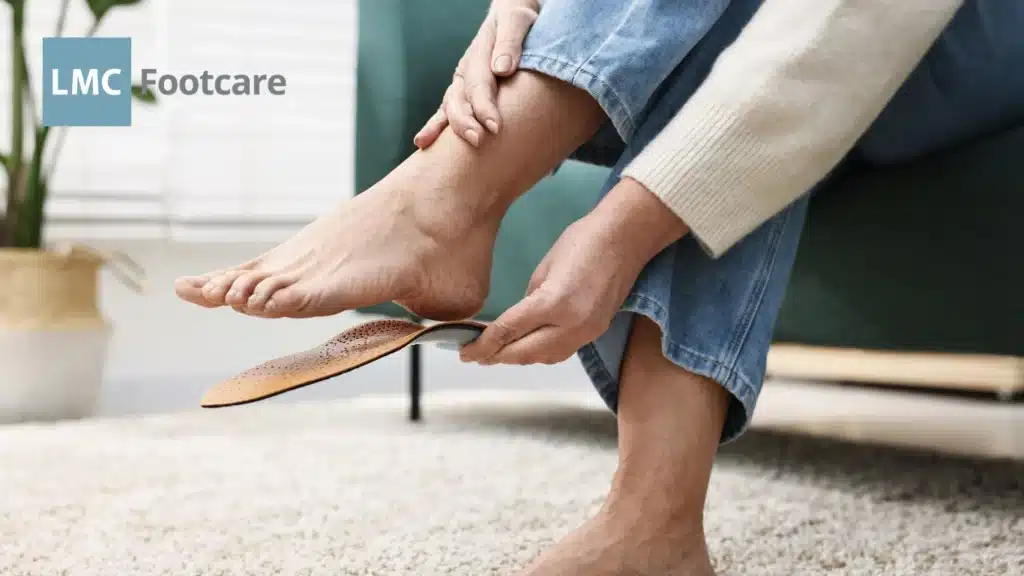
Some knee discomfort in the first few weeks of wearing new orthotics can be normal as your body adjusts to a corrected foot position and altered gait mechanics. However, persistent or worsening knee pain after wearing orthotics is a sign that the devices may not be correctly prescribed, fitted, or broken in. At LMC Footcare, registered chiropodists and Canadian Certified Pedorthists across Ontario assess orthotic fit and biomechanics to ensure your devices are working correctly for your body.
Why Do My Knees Hurt After Wearing New Orthotics?
When orthotics change the position of the foot, they alter the alignment of the entire lower limb, including the ankles, knees, and hips. This shift in mechanics can cause temporary muscle soreness and joint sensitivity as the body adapts to a new movement pattern. Knee discomfort during the break-in period is relatively common, particularly in the first one to three weeks, and typically resolves as the muscles and joints adjust to the corrected alignment.
How Long Does It Take to Adjust to New Orthotics?
Most people fully adjust to new orthotics within four to six weeks. During this period, it is recommended to introduce the orthotics gradually, starting with a few hours of wear per day and increasing use incrementally over several weeks. Jumping straight into full-day wear, particularly during high-impact activity, increases the likelihood of temporary knee or hip discomfort as the body adapts more abruptly to the change in mechanics.
When Is Knee Pain After Orthotics Not Normal?
Knee pain that is sharp, worsening over time, present on only one side, or that does not improve after the initial four to six week adjustment period is not a normal part of breaking in orthotics. This type of pain may indicate that the orthotic prescription is incorrect, the devices are not fabricated to the right specifications, or that the orthotics are overcorrecting or undercorrecting the underlying biomechanical issue. In these cases a reassessment is important.
Can Orthotics Actually Cause Knee Problems?
Incorrectly prescribed or poorly fitted orthotics can contribute to knee discomfort by altering the alignment of the lower limb in a way that places uneven stress on the knee joint. For example, an orthotic that posts the foot into excessive pronation correction can increase internal rotation at the knee, creating strain on the medial structures. This is why accurate biomechanical assessment before prescription is essential; orthotics that are not tailored to your specific gait pattern and foot structure, such as over-the-counter orthotics, can do more harm than good.
What Should I Do if My Knees Hurt After Wearing Orthotics?
If your knee pain is mild and appears within the first few weeks of wear, reduce your daily wearing time and reintroduce the orthotics more gradually. If the pain is significant, worsening, or has persisted beyond six weeks, book a reassessment with LMC Footcare. Our chiropodists and Canadian Certified Pedorthists review orthotic fit and performance at follow-up appointments and make adjustments where needed to ensure your devices are supporting rather than stressing your joints.
Can the Wrong Footwear Make Orthotics Cause Knee Pain?
Yes. Orthotics are designed to function within a specific type of footwear, typically a shoe with a removable insole, adequate depth, and a supportive structure. Wearing orthotics in flat shoes, slip-ons, or footwear that is too shallow can alter how the orthotic sits and functions, changing the correction it provides and potentially creating misalignment at the knee. If your knee pain began after switching footwear, the shoe rather than the orthotic may be the primary issue.
Do Orthotics Help or Hurt Knee Pain in the Long Term?
When correctly prescribed and fitted, custom orthotics are an effective tool for managing and reducing knee pain associated with biomechanical conditions such as overpronation, flat feet, and patellofemoral syndrome. By improving foot and lower limb alignment, they reduce the abnormal forces that contribute to knee joint stress over time. The key distinction is between an initial adjustment period and ongoing or worsening pain, which signals a problem with the prescription or fit.
Can Orthotics Help With Knee Conditions Like Patellofemoral Syndrome?
Yes. Patellofemoral syndrome, commonly known as runner’s knee, is often linked to poor lower limb alignment caused by overpronation or flat feet. Custom orthotics that correct foot mechanics can reduce the inward rotation of the knee that contributes to patellofemoral pain, making them a widely recommended component of conservative treatment for this condition. At LMC Footcare, our chiropodists assess the relationship between foot mechanics and knee symptoms to determine whether orthotics are an appropriate part of your treatment plan.
Should I Stop Wearing My Orthotics if My Knees Hurt?
Not necessarily. Stopping orthotics abruptly may cause a return of the original symptoms the devices were prescribed to manage. A better approach is to reduce wearing time temporarily while booking a reassessment with your foot care professional. At LMC Footcare, our team can evaluate whether the knee discomfort is part of a normal adjustment process or indicates that the orthotic prescription needs to be reviewed and modified.
Related Conditions We Treat
Knee pain related to orthotics often connects to broader biomechanical patterns across the lower limb. At LMC Footcare, our team assesses and treats a range of related conditions, including flat feet and overpronation contributing to knee misalignment, patellofemoral syndrome and runner’s knee, plantar fasciitis and heel pain, Achilles tendonitis, shin splints and lower leg overuse conditions, and hip and lower back pain linked to foot mechanics. Treating the full kinetic chain, from the foot upward, leads to the most complete and lasting outcomes.
Who Can Reassess Your Orthotics at LMC Footcare?
At LMC Footcare, registered chiropodists conduct full biomechanical reassessments to evaluate how your orthotics are performing and whether adjustments are needed. Canadian Certified Pedorthists bring specialized expertise in orthotic fit and fabrication, ensuring the physical device matches the prescription and is performing correctly within your footwear. Together, they provide a complete reassessment pathway at clinic locations across Ontario, including Toronto and Vaughan.
Frequently Asked Questions
Q: How do I know if my orthotics are the wrong prescription?
Signs that your orthotic prescription may be incorrect include persistent discomfort beyond six weeks of gradual break-in, pain that is worse in one limb than the other, new pain in joints that were not previously symptomatic, or a return of the original symptoms the orthotics were meant to address. A reassessment at LMC Footcare can identify whether the prescription, fabrication, or footwear is contributing to the problem.
Q: Can orthotics be adjusted after they are made?
Yes. Custom orthotics can be modified after fabrication through a process called grinding or posting, which changes the angle or cushioning of specific areas of the device.
Q: How long should custom orthotics last before needing replacement?
Custom orthotics typically last between two and five years, depending on activity level, body weight, and the materials used. Signs that orthotics need replacing include visible wear or compression of the device, a return of symptoms, or significant changes in body weight, activity level, or foot structure. Regular check-ups at LMC Footcare allow your orthotics to be assessed and replaced at the right time.
Q: Can I book a reassessment at LMC Footcare if my orthotics were prescribed elsewhere?
Yes. LMC Footcare welcomes patients seeking a second opinion or reassessment on orthotics prescribed by another provider.