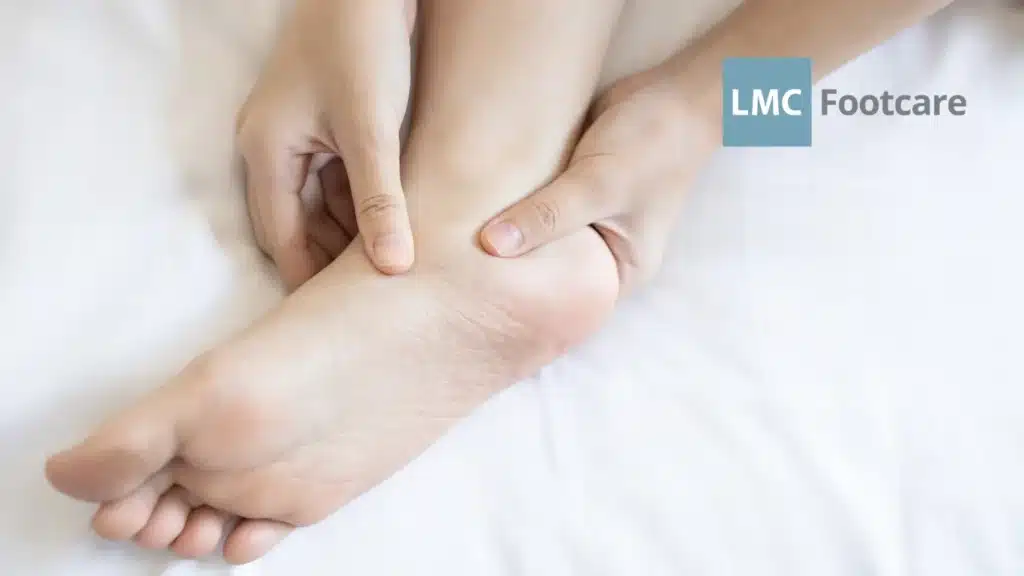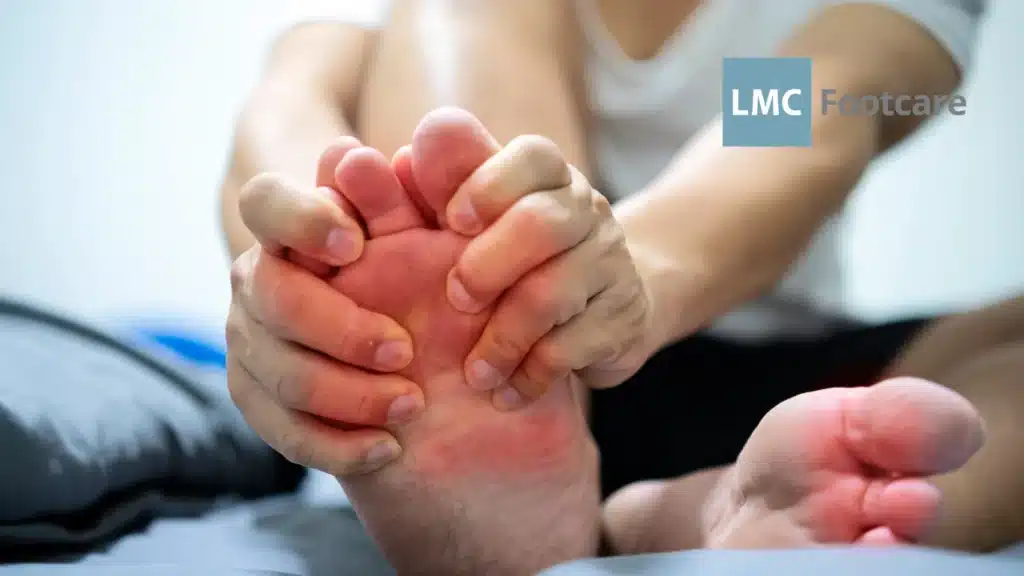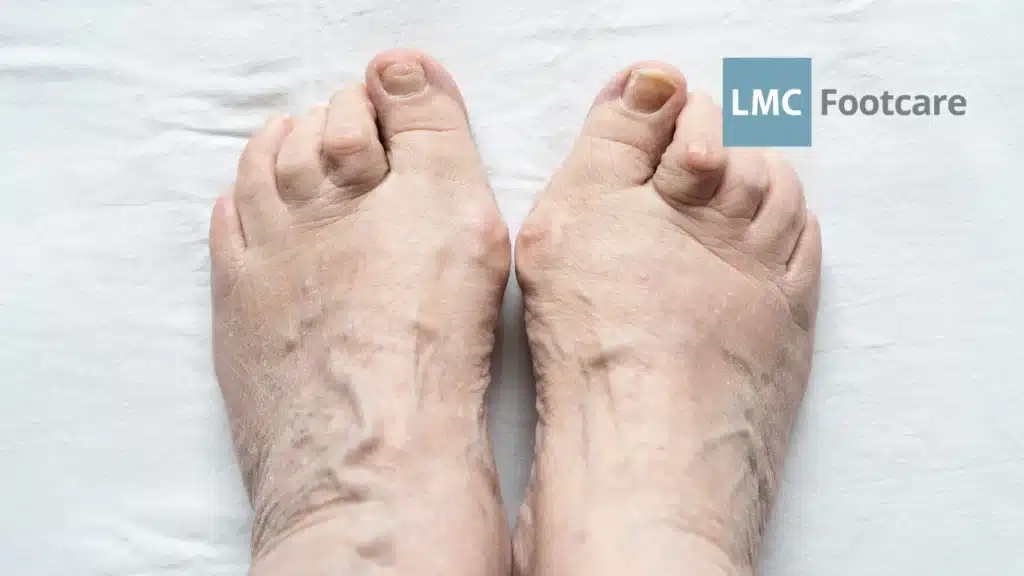


Heel pain in children is not always growing pains. While growing pains are common, persistent or activity-related heel pain in kids is more often a sign of a specific condition, most commonly Sever’s disease, a condition affecting the growth plate at the back of the heel. These conditions can affect a child’s ability to stay active and participate in sports if they are not addressed. At LMC Footcare, our registered chiropodists and Canadian Certified Pedorthists assess pediatric heel pain across clinic locations in Ontario, including Toronto and Vaughan, and provide custom orthotic solutions designed for growing feet.
What Are Growing Pains in Children?
Growing pains are generalized aching sensations that typically occur in the muscles of the thighs, calves, and behind the knees. They most commonly occur in the evening or at night and do not usually interfere with physical activity during the day. If your child’s heel pain is happening during or after activity, or is localized to the back or bottom of the heel, it is unlikely to be classic growing pains and warrants a closer look.
What Is Sever’s Disease and Is It Common in Kids?
Sever’s disease, also known as calcaneal apophysitis, is the most common cause of heel pain in active children and adolescents, typically affecting those between the ages of 8 and 14. It occurs when the growth plate at the back of the heel becomes inflamed due to repetitive stress and tension from the Achilles tendon during periods of rapid growth. Despite the name, it is not a disease; it is a temporary but treatable condition that responds well to early intervention.
How Do I Know if My Child Has Sever’s Disease or Just Growing Pains?
The key distinction is where and when the pain occurs. Sever’s disease causes pain specifically at the back or sides of the heel, typically during or after physical activity such as running or jumping. It often improves with rest and worsens when activity resumes. Growing pains, by contrast, tend to be diffuse, occur at night, and are not linked to specific physical activity. If your child is limping, avoiding activity, or complaining of heel pain consistently, a professional assessment is the most reliable way to determine the cause.
What Causes Heel Pain in Active Children?
Heel pain in active children is most commonly caused by stress on the heel’s growth plate during periods of rapid bone growth, when the bones lengthen faster than surrounding muscles and tendons can adapt. This creates increased tension at the point where the Achilles tendon attaches to the heel bone. Children who participate in high-impact sports such as soccer, basketball, gymnastics, and running are particularly susceptible, especially during growth spurts.
Can Flat Feet Cause Heel Pain in Children?
Yes. Children with flat feet or overpronation, where the arch collapses inward during walking and running, place additional strain on the heel and Achilles tendon with every step. This biomechanical pattern significantly increases the risk of Sever’s disease and other forms of pediatric heel pain. Correcting foot alignment through custom orthotics is often a central part of managing heel pain in children with flat feet, as it addresses the root mechanical cause rather than just the symptoms.
Can Custom Orthotics Help With Heel Pain in Kids?
Yes. Custom orthotics are one of the most effective interventions for pediatric heel pain, particularly when the underlying cause involves biomechanical issues such as flat feet, overpronation, or leg length discrepancy. By supporting the arch and cushioning the heel, custom orthotics reduce the stress placed on the growth plate during activity. They also help correct gait patterns that contribute to heel strain, allowing children to stay active during recovery rather than sitting on the sidelines. At LMC Footcare, our chiropodists prescribe custom orthotics specifically designed for growing feet, with follow-up adjustments as the child develops.
Are Custom Orthotics Safe for Children?
Yes. Custom orthotics are safe for children and are commonly prescribed for a range of pediatric foot conditions. Unlike adult orthotics, pediatric devices are designed to accommodate the natural development of the foot and are adjusted or replaced as the child grows. Early orthotic intervention can also help guide healthy foot development and prevent conditions from becoming more entrenched as the child gets older. A chiropodist or Canadian Certified Pedorthist will assess whether orthotics are appropriate based on the child’s age, foot structure, and activity level.
What Other Treatments Help With Heel Pain in Kids?
Alongside custom orthotics, pediatric heel pain is typically managed with a temporary reduction in high-impact activity, calf and Achilles stretching to relieve tension on the growth plate, supportive footwear with adequate heel cushioning and arch support, and heel cups or padding to absorb shock during activity. In more persistent cases, laser therapy can be used to reduce inflammation and support tissue healing. At LMC Footcare, our team builds a treatment plan around the child’s specific condition, activity level, and stage of growth to ensure the most effective and age-appropriate approach.
When Should I Take My Child to See a Foot Care Professional?
You should seek a professional assessment if your child is consistently complaining of heel pain during or after activity, is limping or changing the way they walk, is avoiding sports or physical education, or if the pain has persisted for more than one to two weeks. Early assessment is important because untreated growth plate conditions can worsen with continued activity and take longer to resolve. The sooner the underlying cause is identified, the sooner your child can return to full activity comfortably.
What Footwear Should Children With Heel Pain Wear?
Children with heel pain should wear shoes with adequate arch support, and supportive midsoles that absorb impact. Flat shoes, worn-out sneakers, and footwear without structure significantly increase stress on the heel during activity. For children with flat feet or overpronation, supportive footwear alone is often not sufficient — custom orthotics placed inside appropriate shoes provide the additional biomechanical correction needed to fully address the condition.
Related Conditions We Treat
Pediatric heel pain rarely exists in isolation, and the biomechanical factors that contribute to it can affect other areas of the foot and lower limb. At LMC Footcare, our team assesses and treats a range of related conditions in children and adolescents, including flat feet and overpronation, Achilles tendon tightness, in-toeing and out-toeing gait patterns, knee pain linked to foot mechanics, and general lower limb alignment concerns. Addressing these conditions early, while the foot is still developing, leads to the best long-term outcomes.
Who Assesses and Treats Pediatric Heel Pain at LMC Footcare?
At LMC Footcare, registered chiropodists and Canadian Certified Pedorthist conduct thorough biomechanical assessments of children’s feet and gait, diagnose the underlying cause of heel pain, and prescribe custom orthotics where appropriate. With clinic locations across Ontario, including Toronto and Vaughan, LMC Footcare provides accessible, professional pediatric foot care close to home.
Frequently Asked Questions
Q: At what age can children start wearing custom orthotics?
Custom orthotics can be prescribed for children as young as seven years old, depending on the nature of the foot condition and the child’s ability to tolerate the device. Pediatric orthotics are designed to be lightweight, comfortable, and accommodating of natural foot development. A chiropodist or Canadian Certified Pedorthistat LMC Footcare will assess whether orthotics are appropriate for your child’s age and foot structure during the initial assessment.
Q: Will my child grow out of heel pain on their own?
Some cases of Sever’s disease do resolve on their own once a child passes through the growth spurt triggering the condition. However, without addressing the underlying biomechanical factors, such as flat feet or tight calf muscles, the condition is likely to recur during subsequent growth spurts or persist longer than necessary. Professional assessment and early intervention significantly shorten recovery time and reduce the likelihood of the condition returning.
Q: How often do children’s orthotics need to be replaced?
Children’s orthotics typically need to be assessed and potentially replaced every one to two years, depending on how quickly the child’s feet are growing. Regular follow-up appointments at LMC Footcare allow the orthotics to be evaluated for fit and function, and new devices can be prescribed when the child’s feet have outgrown the existing pair.
Q: Can my child still play sports while being treated for heel pain?
In many cases, children can continue participating in sport at a modified level during treatment, particularly once custom orthotics and appropriate footwear are in place. High-impact activity may need to be temporarily reduced during the acute phase. A chiropodist or Canadian Certified Pedorthist at LMC Footcare will advise on what level of activity is safe for your child based on the severity of the condition and how they are responding to treatment.
Q: Does my child need a referral to be seen at LMC Footcare for heel pain?
No referral is needed. You can book a pediatric foot assessment directly at any LMC Footcare location across Ontario, including Toronto and Vaughan. Our registered chiropodists and Canadian Certified Pedorthists will assess your child’s heel pain, identify the underlying cause, and recommend the most appropriate treatment — including custom orthotics if indicated. Book your child’s appointment today at lmcfootcare.ca or by calling 1-844-562-3668.