

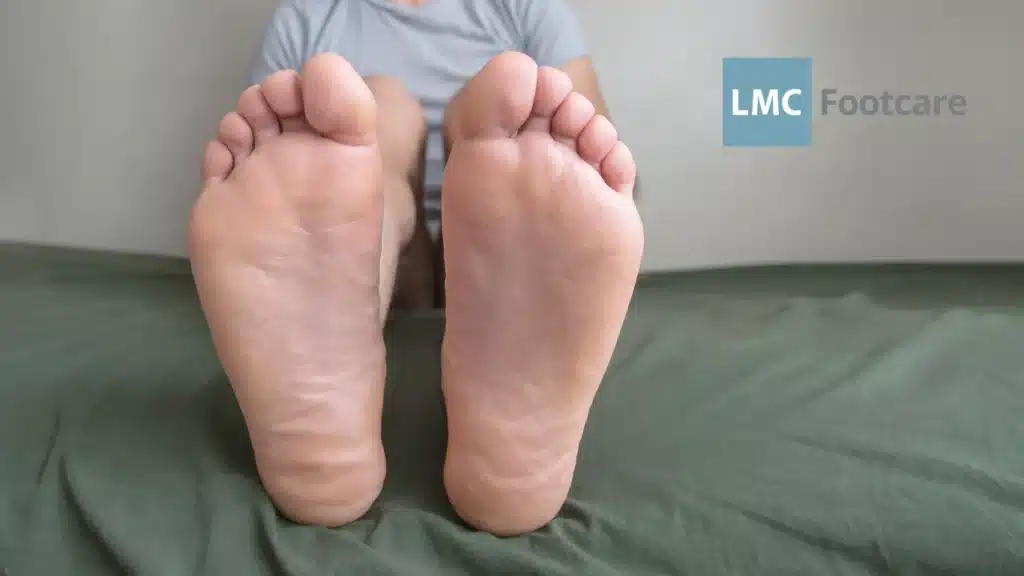
For most adults, custom orthotics manage flat feet rather than permanently correcting the underlying foot structure. They work by supporting the arch, redistributing pressure, and improving alignment during weight-bearing activity — significantly reducing pain and preventing related complications — but they do not change the bone structure of an adult foot. In growing children, however, orthotics can play a role in guiding healthy foot development. At LMC Footcare, our registered chiropodists and Canadian Certified Pedorthists across Ontario, including Toronto and Vaughan, set realistic expectations from the start so patients understand exactly what their orthotics are doing.
What Does It Mean for Orthotics to “Manage” Rather Than “Correct” Flat Feet?
Managing flat feet means using orthotics to support the arch and improve foot alignment during use, reducing pain and abnormal stress on the foot and lower limb. Correcting flat feet would mean permanently changing the underlying bone and ligament structure so the arch remains elevated even without the orthotic. In most adults, the foot’s bone structure is fully developed and fixed, so orthotics function as ongoing support rather than a permanent structural fix.
Why Can’t Orthotics Permanently Change an Adult’s Foot Structure?
By adulthood, the bones, ligaments, and joints of the foot have fully matured and are no longer capable of significant structural remodeling. Orthotics work by changing the forces acting on the foot while they are being worn, which improves alignment and reduces strain in the moment. Once the orthotic is removed, the foot returns to its natural resting structure. This is similar to how glasses correct vision while worn but do not permanently reshape the eye.
Can Orthotics Correct Flat Feet in Children?
Orthotics have a greater potential to influence foot development in children because their bones, joints, and ligaments are still growing and adapting. Supporting the arch during these developmental years can help guide more favourable biomechanics as the foot matures, and in some cases reduce the severity of flat feet by adulthood. This is why early assessment matters; the earlier flat feet are identified and supported in a child, the more influence orthotic therapy can have on long-term foot development. Book your child’s feet assessment with one of our footcare clinics in Ontario for early diagnosis.
If Orthotics Don’t Permanently Correct Flat Feet, Are They Still Worth Wearing?
Yes. Even though orthotics generally manage rather than cure flat feet in adults, the benefits of consistent use are substantial. They reduce pain, prevent the secondary conditions that flat feet commonly cause, improve walking and standing comfort, and allow people to remain active without the cumulative joint stress that untreated flat feet can create over years. Many of the complications associated with flat feet are far more difficult to treat than the flat feet themselves, making ongoing orthotic support a worthwhile long-term investment.
What Happens to Flat Feet if They Are Left Untreated?
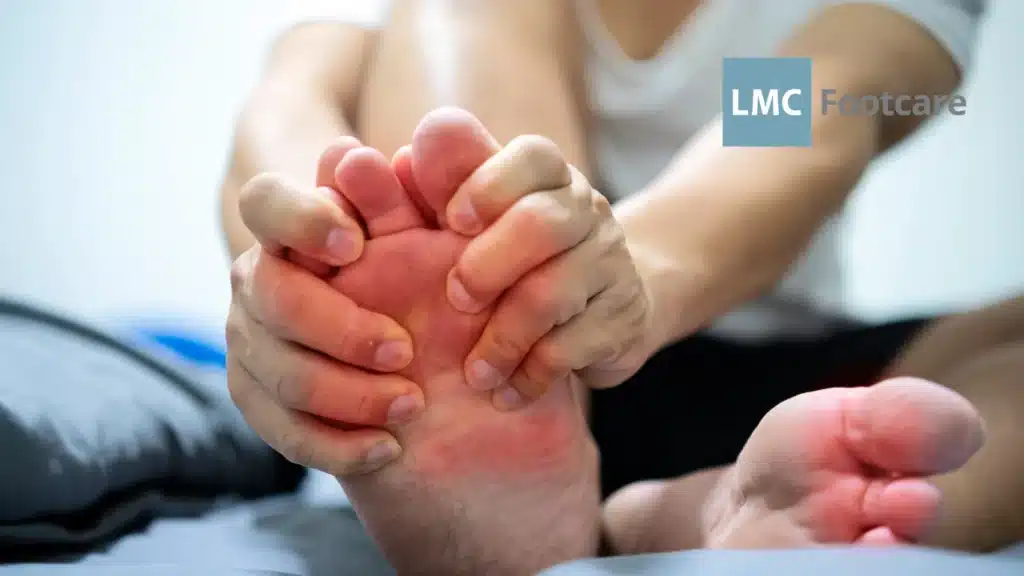
Untreated flat feet place uneven stress on the foot, ankle, knee, and hip over time, which can contribute to a range of secondary conditions as the years go on. Without arch support, the soft tissues of the foot are forced to compensate for the lack of structural support, often leading to fatigue, pain, and progressive biomechanical strain throughout the lower limb. Addressing flat feet early with orthotic support helps prevent this cumulative impact.
Do Orthotics Need to Be Worn Permanently to Manage Flat Feet?
For most adults with symptomatic flat feet, ongoing orthotic use is required to maintain the benefits, since the underlying foot structure does not change. This does not mean orthotics must be worn every waking hour indefinitely — many people wear them during work, exercise, or extended periods of standing and walking, while using supportive footwear without orthotics for lighter activities. A chiropodist can help determine an appropriate long-term wear pattern based on your symptoms, activity level, and foot structure.
How Do I Know if My Flat Feet Need Custom Orthotics or Just Supportive Shoes?
Mild, asymptomatic flat feet may be adequately managed with supportive footwear alone, particularly in people who are not experiencing pain or related symptoms. However, if you are experiencing foot, ankle, or knee discomfort, or if your flat feet are contributing to other conditions, custom orthotics provide a level of targeted support and correction that generic supportive shoes cannot achieve. A biomechanical assessment at LMC Footcare is the most reliable way to determine which level of support your feet require.
What Should I Expect From Custom Orthotics for Flat Feet?
Realistic expectations for custom orthotics include reduced pain and fatigue during standing and walking, improved alignment and gait mechanics while the orthotics are worn, and prevention of secondary complications associated with flat feet over time. What custom orthotics will not do is permanently raise or reshape the arch once removed. Understanding this distinction helps patients use their orthotics consistently and get the most benefit from them long-term.
Related Conditions We Treat
Flat feet are connected to several other conditions that our team regularly assesses and treats. For more detail on how flat feet and overpronation contribute to specific issues, see our related articles on heel pain in children and Sever’s disease, ball-of-foot pain and metatarsalgia, and knee discomfort linked to orthotic and foot mechanics. At LMC Footcare, we look at the full picture of how your foot structure affects your whole body, not just an isolated symptom.
Frequently Asked Questions
Q: Can flat feet be cured without surgery?
For most adults, flat feet cannot be structurally cured without surgical intervention, which is typically reserved for severe cases involving significant pain or deformity. Non-surgical management through custom orthotics, supportive footwear, and targeted exercises is highly effective at reducing symptoms and preventing complications, and is the appropriate first-line approach for the vast majority of people with flat feet.
Q: Will my flat feet get worse if I don’t wear orthotics?
Flat feet themselves do not necessarily worsen structurally without orthotics, but the symptoms and secondary effects often do progress without proper support, particularly with continued high-impact activity or prolonged standing. Many people find that pain and fatigue increase over time when flat feet are left unmanaged, even if the foot’s structure remains relatively stable.
Q: Are custom orthotics more effective than arch support insoles from a store?
Custom orthotics are generally more effective than over-the-counter arch support insoles because they are built to the precise contours and biomechanical needs of your individual foot, rather than a generalized shape. For mild cases, store-bought options may provide adequate comfort, but for moderate to significant flat feet or related symptoms, custom orthotics typically provide more targeted and lasting support.
Q: Can adults with flat feet still see improvement in foot development?
While the underlying bone structure does not change in adulthood, adults can still see meaningful functional improvement with custom orthotics, including better alignment, reduced strain on surrounding joints, and improved walking mechanics. The improvement is in how the foot functions and feels during activity, not in a permanent change to its resting shape.
Q: How do I find out if I have flat feet and need orthotics?
A biomechanical assessment at LMC Footcare can determine whether you have flat feet, assess the severity, and identify whether you are experiencing any related symptoms. Book an assessment at your nearest LMC Footcare location across Ontario, including Toronto and Vaughan, at lmcfootcare.ca or by calling 1-844-562-3668.