


Most of us don’t think much about the socks we pull on in the morning. They keep your feet warm, protect them from your shoes, and that’s about it, right?
For many people, that’s true. But for a growing number of Canadians dealing with leg swelling, tired, heavy legs, varicose veins, circulation issues, or jobs that keep them on their feet for hours, the type of sock they wear actually makes a meaningful medical difference.
That’s where compression stockings come in. They look similar to regular socks, but the way they’re designed and what they do for your body are entirely different.
This post breaks down exactly what sets compression stockings apart, who genuinely benefits from wearing them, and when it’s worth talking to a specialist about getting properly fitted.
What Makes Compression Stockings Different?
Compression stockings are engineered to apply a specific, controlled amount of pressure to your legs and feet. The defining characteristic is graduated compression, meaning the pressure is firmest at the ankle and gradually decreases as the stocking moves up the calf or thigh.
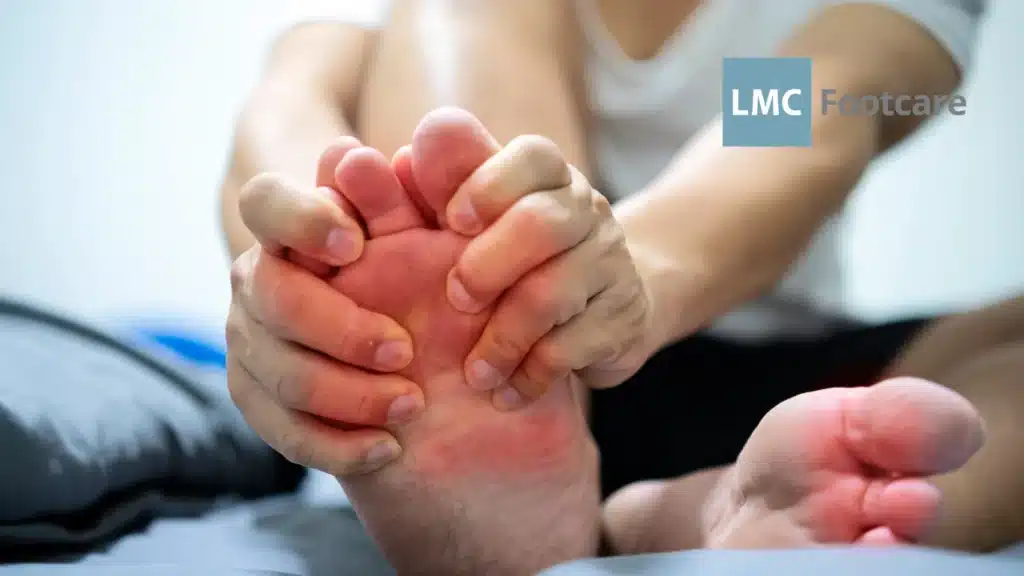
This graduated design mirrors and assists your body’s natural circulatory mechanics. Your veins rely on muscular contractions and valves to push blood upward against gravity. When circulation is compromised, through prolonged sitting, standing, venous disease, or other factors, blood can pool in the lower legs, causing swelling, fatigue, heaviness, and, over time, more serious vascular complications.
Compression stockings counteract this by providing external support to the vein walls, reducing the diameter of distended veins and improving the efficiency of blood return to the heart.
A regular sock cannot do any of this. It has no pressure gradient, no therapeutic effect on circulation, and no ability to reduce fluid accumulation.
Compression Levels: What the Numbers Mean
Compression stockings are measured in millimetres of mercury (mmHg), the same unit used for blood pressure. Different levels are appropriate for different needs:
15–20 mmHg (Mild compression) This is the most widely available level and can often be purchased without a prescription. It’s suitable for everyday leg fatigue, mild swelling, long travel days, and standing or sitting for extended periods. Many people start here.
20–30 mmHg (Moderate compression) This is the most commonly prescribed therapeutic level, recommended for conditions like varicose veins, edema, post-surgical recovery, pregnancy-related swelling, and DVT prevention. This level should ideally be fitted by a professional to ensure correct sizing and pressure.
30–40 mmHg (Firm compression) Prescribed for more significant venous conditions, including moderate to severe varicose veins, chronic venous insufficiency, and lymphedema. This level requires a clinical assessment and professional fitting.
40 mmHg and above (Extra firm) Reserved for severe venous disease and typically only worn under medical supervision.
A regular sock, regardless of how thick or tight it feels, applies zero mmHg of graduated pressure.
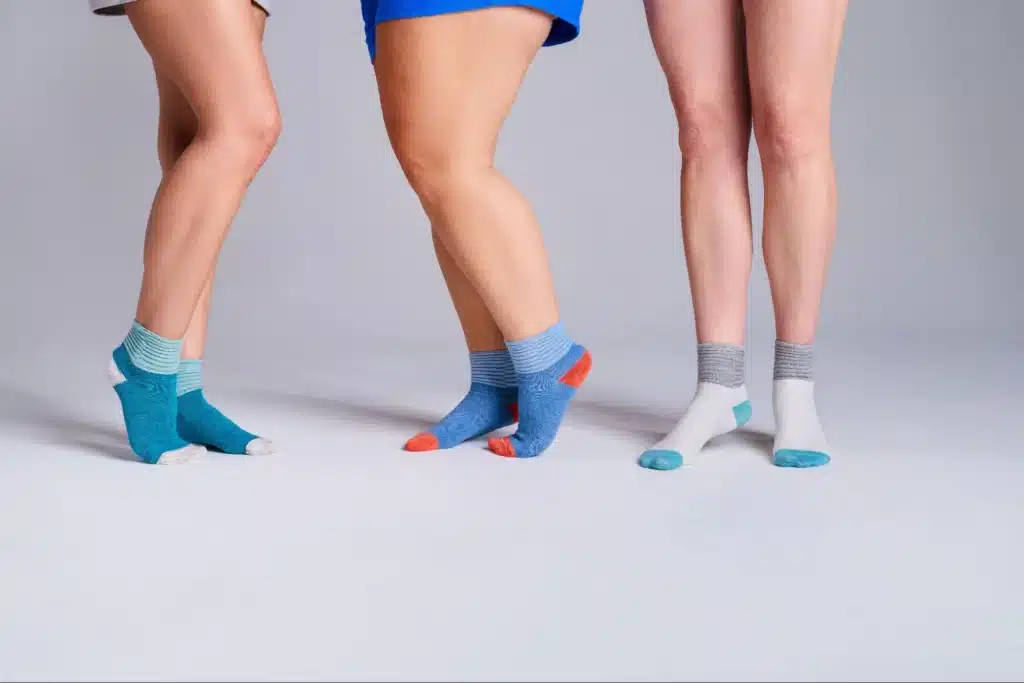
Side-by-Side Comparison
| Feature | Regular Socks | Compression Stockings |
| Pressure applied | None | Graduated (firmest at ankle) |
| Improves circulation | No | Yes |
| Reduces swelling | No | Yes |
| Helps prevent DVT | No | Yes (at appropriate level) |
| Supports vein health | No | Yes |
| Reduces leg fatigue | Minimally (cushioning only) | Yes |
| Requires fitting | No | Recommended for therapeutic levels |
| Medical use | No | Yes |
| Available in multiple compression levels | No | Yes (15–20, 20–30, 30–40+ mmHg) |
Who Should Be Wearing Compression Stockings (Not Just Regular Socks)?
Compression stockings are recommended across a wide range of situations, many of which people don’t typically associate with a medical product.
People who stand or sit for long periods If your workday keeps you on your feet for hours — nurses, teachers, retail workers, hairdressers, tradespeople — your calf muscles are working overtime to pump blood upward. By the end of the day, that pooling blood shows up as heavy, aching legs and swollen ankles. Compression stockings reduce this significantly. We covered this in more detail in our post on when you should start wearing compression socks and the key signs to watch for.
Frequent travellers Sitting in a plane or car for hours with your legs in a fixed position is one of the most common scenarios for developing swollen ankles and, in higher-risk individuals, deep vein thrombosis (DVT). Compression stockings keep blood moving during long journeys. See our detailed post on compression socks and DVT prevention for long flights.
Pregnant women Pregnancy significantly increases blood volume and places pressure on the veins returning blood from the lower body. The result is swollen legs, varicose veins, and general leg discomfort — all of which compression stockings help manage. Our post on compression socks for pregnancy and the right mmHg level goes into specifics on choosing the right level.
People with varicose veins or spider veins Varicose veins and spider veins are signs that your vein valves aren’t functioning optimally. Compression stockings provide external support that reduces the aching, heaviness, and visible worsening associated with these conditions. Read more in our post on the role of compression socks in managing varicose veins and leg fatigue.
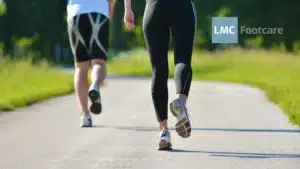
Athletes and active people Runners and endurance athletes use compression socks to improve oxygen delivery to working muscles, reduce vibration-related fatigue, and speed up post-exercise recovery. This is one area where the benefits extend well beyond circulation — they’re a genuine performance and recovery tool. Our post on compression socks for athletes explains how.
People with edema or chronic leg swelling Edema, fluid retention in the lower limbs, is one of the primary indications for therapeutic compression. A properly fitted compression stocking at the right level is one of the most effective non-invasive management tools available.
If any of these situations apply to you, compression stockings are worth looking into. Talk to a chiropodist at LMC Footcare to find out what level is right for you.
What to Expect at LMC Footcare
Booking a compression stocking consultation at LMC Footcare is straightforward. One of our specialists will ask about your symptoms, medical history, and daily routine, then take the measurements needed to identify the correct size, compression level, and style for your needs. You’ll leave with a stocking that fits properly and does what it’s supposed to.
Our clinics are located across Ontario — Barrie, Brampton, Bayview/Midtown Toronto, Etobicoke, Oakville, Ottawa, Scarborough, and Vaughan — so there’s a location near you wherever you are in the province.
Many extended health benefit plans in Ontario cover compression stockings when prescribed by a registered chiropodist. Our team can provide the documentation needed for your insurer.
Ready to stop settling for heavy, aching legs? Book a compression sock fitting at LMC Footcare today.
Frequently Asked Questions
1. Can I wear compression stockings every day?
Yes — in fact, for people with ongoing conditions like varicose veins, edema, or chronic leg fatigue, daily wear is typically recommended. They should generally be put on in the morning before you get out of bed, when swelling is at its lowest, and removed at night.
2. Are compression stockings covered by insurance in Ontario?
Coverage varies by plan, but many Ontario employer benefits and private insurance plans do cover therapeutic compression stockings. Our team can provide the clinical documentation required for most insurance submissions.
3. Do compression stockings help with leg cramps?
They can help reduce the frequency and intensity of leg cramps associated with poor circulation and muscle fatigue, particularly for people who stand for long periods or experience cramps at night. If you have persistent cramping, it’s worth discussing with one of our specialists as part of a broader assessment.
4. How long do compression stockings last?
With regular use and proper washing, most compression stockings maintain their therapeutic pressure for approximately three to six months, after which they begin to lose elasticity. Most specialists recommend having two to three pairs in rotation to extend the life of each.
5. Can I wear compression stockings with orthotics?
Absolutely. Many patients at LMC Footcare use both — custom orthotics for foot and gait support, and compression stockings for circulation and leg health. The two work on different aspects of lower limb function and complement each other well. Learn more about custom orthotics and whether they might be appropriate for you.
The Bottom Line
Regular socks and compression stockings might look alike at a glance, but they serve completely different purposes. Regular socks are comfort items. Compression stockings are therapeutic devices, engineered to support circulation, reduce swelling, prevent venous complications, and keep your legs feeling better through long days, long flights, and demanding conditions.
If your legs feel heavy, swell by the end of the day, or you’re in a situation, pregnancy, travel, prolonged standing, or an active lifestyle, where circulation support would make a real difference, it’s worth speaking to a specialist about getting properly fitted.
Your legs do a lot of work for you every day. Compression stockings are a simple, non-invasive way to give something back.